


Listen to this article
0:00 / 3:11 · Read by ArtLogia
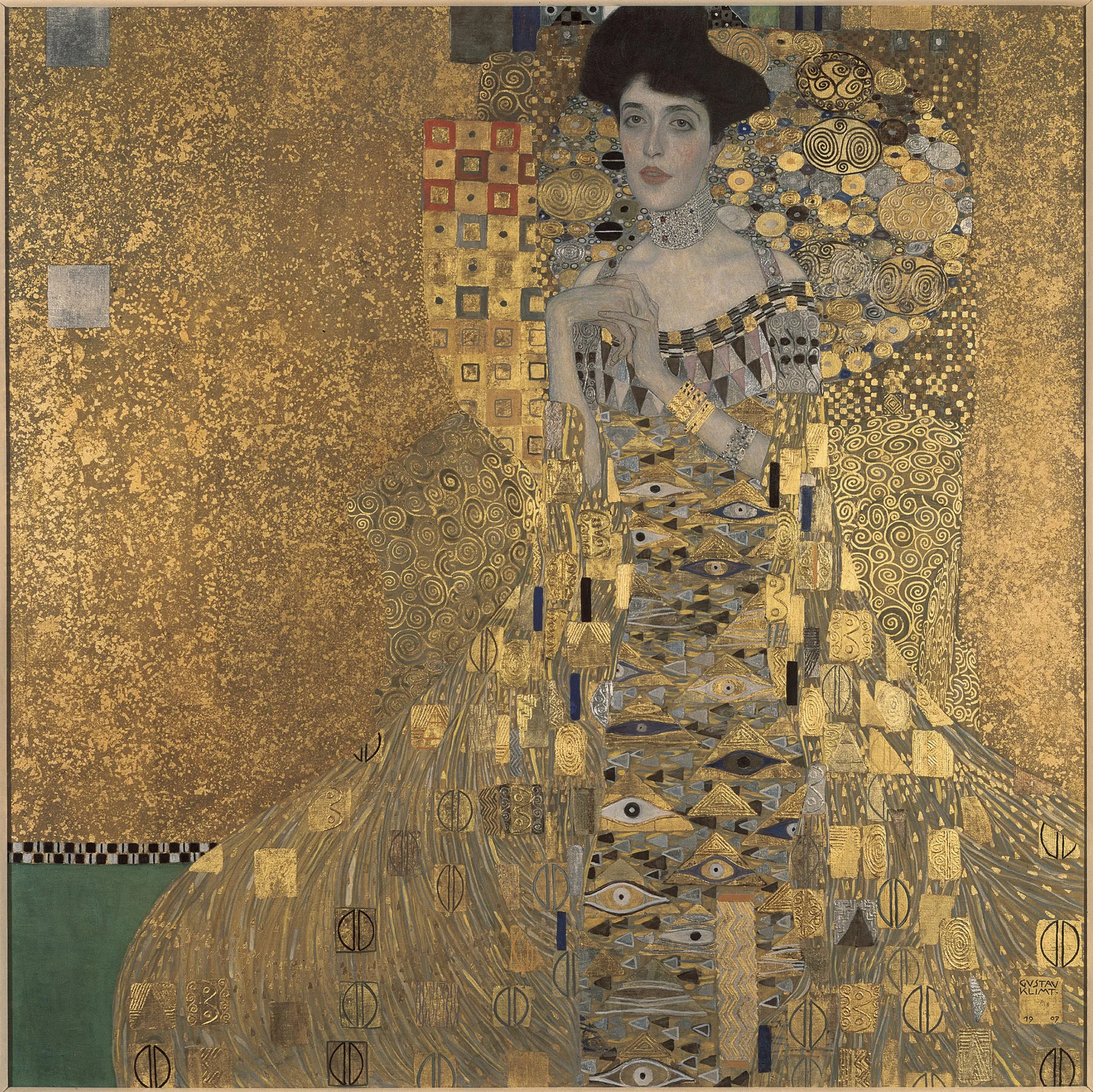
A Viennese woman sits enveloped in a shimmering field of gold, her face and hands emerging from patterns of eyes, spirals and squares. Gustav Klimt's 1907 portrait of Adele Bloch-Bauer was seized by the Nazis, returned to her family after a famous legal battle, and became one of the most expensive paintings ever sold.
In this article
A portrait for a Viennese family
Adele Bloch-Bauer was a wealthy, cultured woman of Vienna, who held a salon frequented by artists, writers and politicians. Her husband, the sugar industrialist Ferdinand Bloch-Bauer, commissioned Gustav Klimt to paint her portrait. Klimt worked on it for about three years and completed it in 1907, at the height of his Golden Period, the same year he painted The Kiss.
It is the only person Klimt painted twice in full-length portraits; the second portrait of Adele, in a very different style, was completed in 1912.
A face in a sea of gold
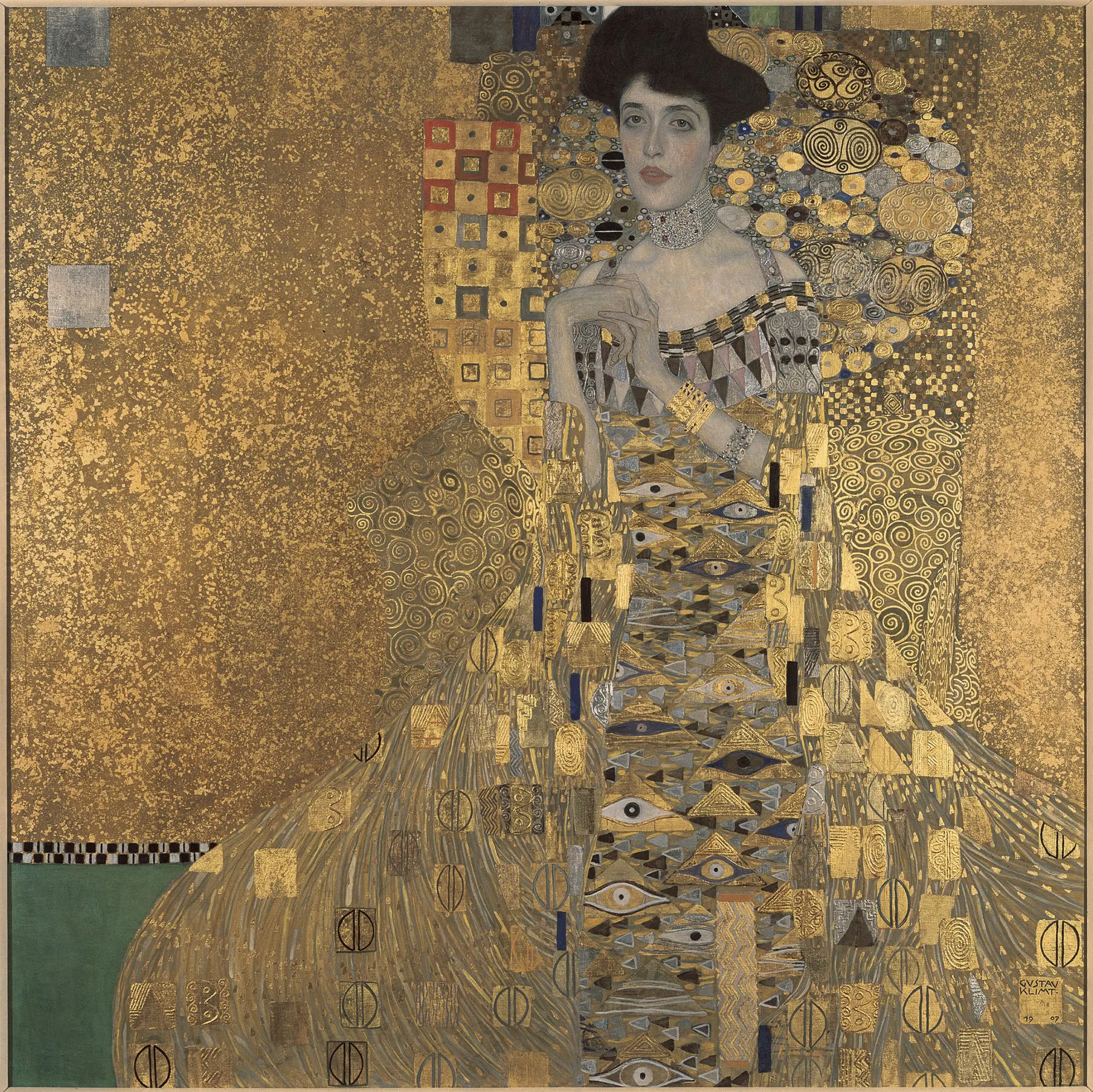
Adele sits in an armchair, but the chair, her dress and the background merge into a single shimmering surface of gold and silver leaf, decorated with patterns. Only her face, shoulders and hands are painted naturalistically, emerging from the gold like a precious stone in a setting.
 Detail 1
Adele's face
Adele's face, painted with soft realism, is framed by her dark hair and the golden background. Her expression is dreamy, her lips slightly parted.
The hands
Adele's hands are clasped together near her face in a nervous, twisted gesture. It has been suggested that she was hiding a deformed finger, an injury from childhood, though this is not certain. The gesture adds tension and intimacy to the decorative splendour.
Detail 2Clasped hands
Adele's hands twist together near her chest. The gesture, possibly hiding a damaged finger, gives the portrait a note of vulnerability.
Eyes, spirals and squares
The dress is covered with motifs inspired by ancient Egypt, Byzantium and Mycenae: Egyptian eyes, spirals, triangles, and the initials of Adele. The background includes rectangles and squares in different shades of gold. Klimt used real gold and silver leaf and raised gesso to give the surface its relief.
Detail 3Eyes on the dress
Stylised eyes, inspired by Egyptian and Mycenaean art, decorate Adele's golden dress. Klimt mixed gold leaf with raised patterns.
Detail 4The golden background
The background is a field of gold squares and flecks, without depth. Adele seems to float in a timeless, precious space.
Seized and returned
Adele died in 1925, and her will asked her husband to leave her portraits to the Austrian State Gallery after his death. But in 1938, when Nazi Germany annexed Austria, Ferdinand, who was Jewish, fled, and his property was seized. The portrait entered the Belvedere, where it was renamed The Lady in Gold to hide the Jewish identity of the sitter.
After the war it remained in Vienna. In the 1990s Adele's niece Maria Altmann, living in Los Angeles, sued the Austrian government for its return. In 2004 the U.S. Supreme Court allowed the case to proceed, and in 2006 an arbitration panel in Austria ruled in her favour. The story was told in the 2015 film Woman in Gold.
The Neue Galerie
In 2006 the painting was bought by Ronald Lauder for the Neue Galerie in New York for a price reported at 135 million dollars, then a record for a painting. It measures 138 by 138 centimetres and hangs on the first floor of the Neue Galerie.
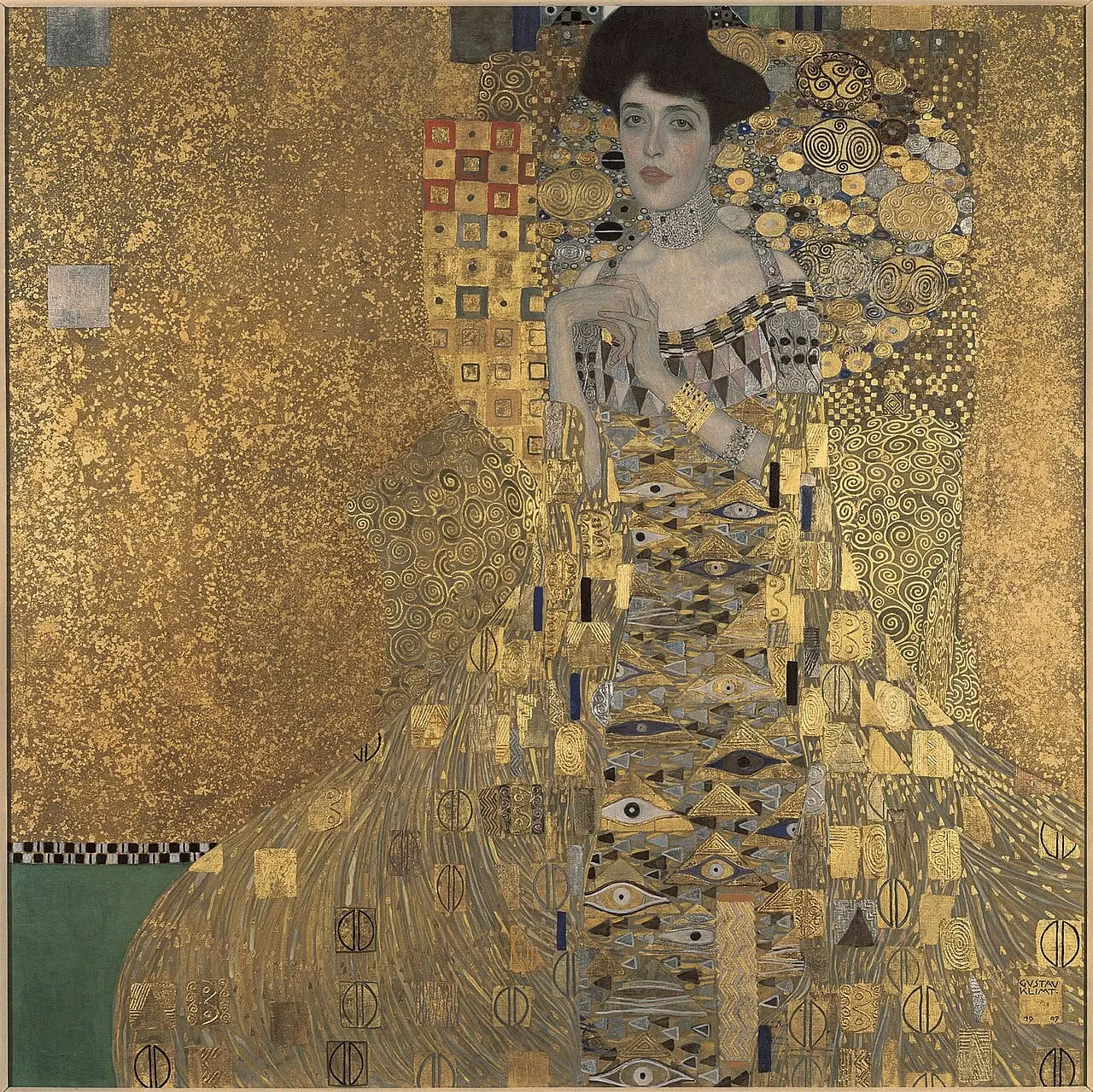
Own a hand-painted copy
Portrait of Adele Bloch-Bauer I
Painted by hand in oil on canvas, any size. Free worldwide shipping.
From $299 — Make it yours.Frequently asked questions
Who was Adele Bloch-Bauer?
Adele Bloch-Bauer was a Viennese salon hostess and patron of the arts, the wife of the industrialist Ferdinand Bloch-Bauer.
Why is it called the Woman in Gold?
The Nazis renamed it The Lady in Gold to hide the Jewish identity of the sitter; the name was later used for the 2015 film about its restitution.
How was the painting returned?
Adele's niece Maria Altmann won a long legal battle, and in 2006 an Austrian arbitration panel ordered its return to the family.
Where is the Portrait of Adele Bloch-Bauer I?
It is in the Neue Galerie in New York.
Sources and further reading
- Neue Galerie New York, collection notes on Adele Bloch-Bauer I
- Anne-Marie O'Connor, The Lady in Gold (2012)
- Republic of Austria v. Altmann, U.S. Supreme Court (2004)
