


Listen to this article
0:00 / 3:33 · Read by ArtLogia
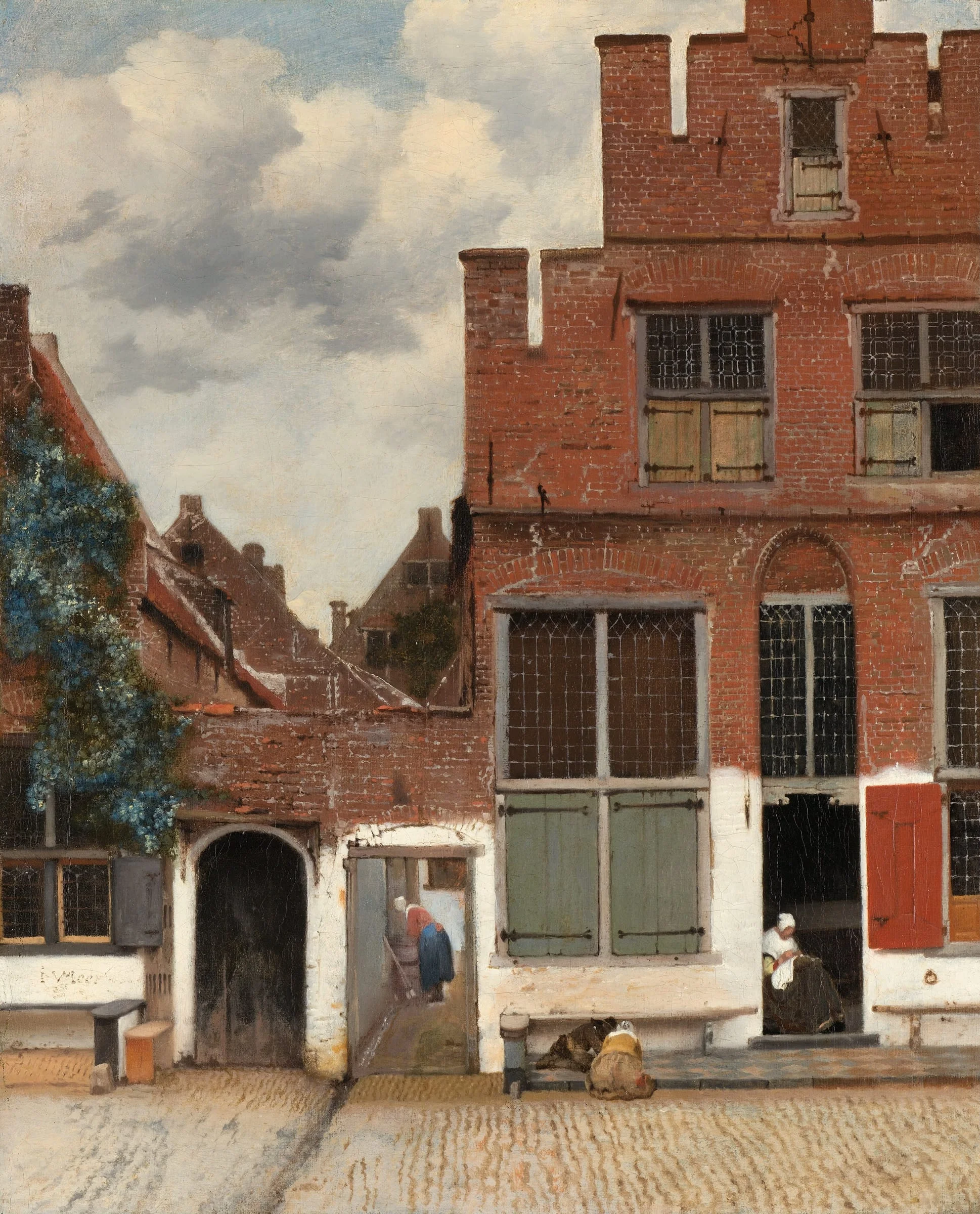
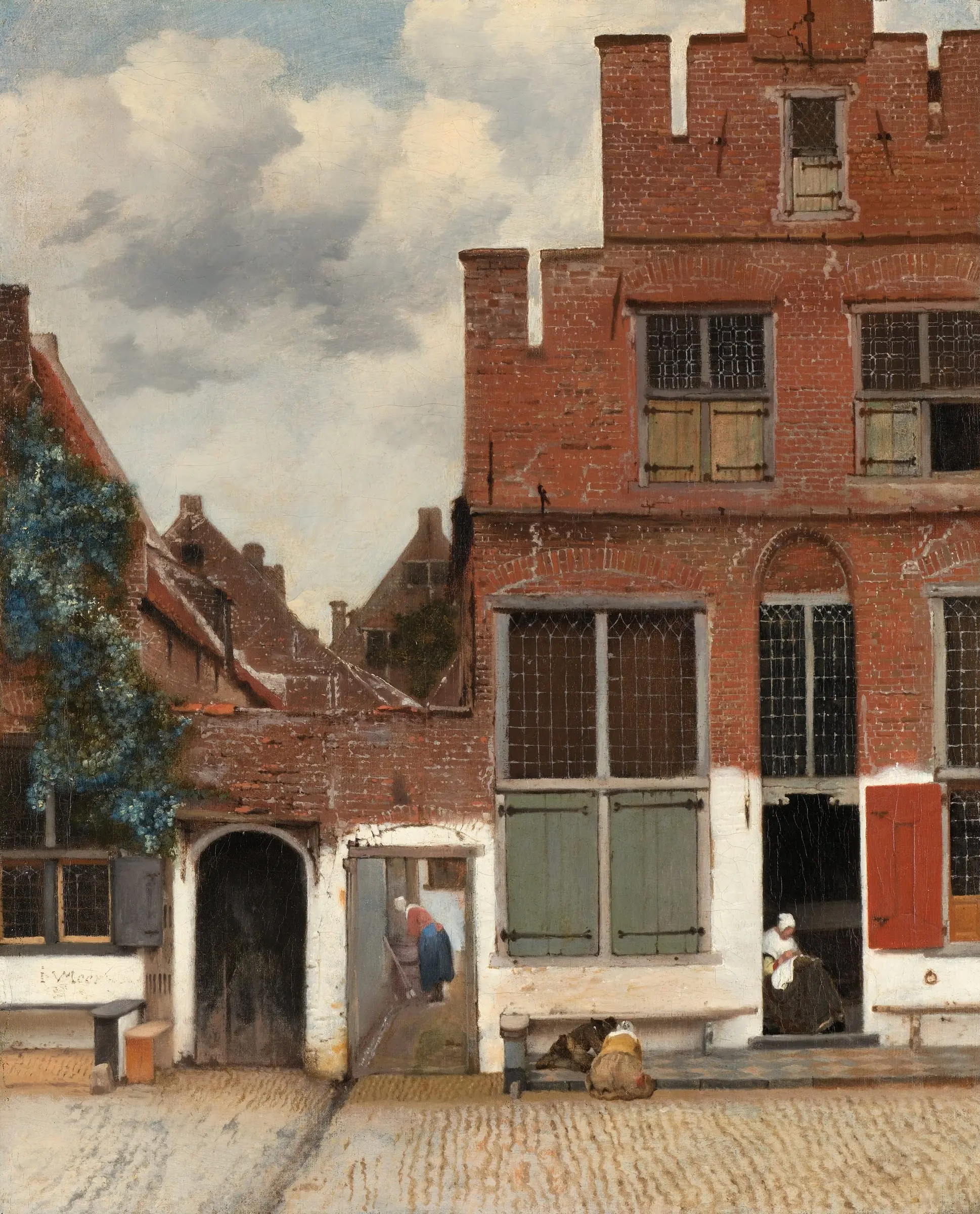
An old brick house in Delft, its shutters open, a woman sewing in the doorway, children playing on the pavement and a maid busy in an alley. The Little Street, painted around 1658, is one of only two cityscapes by Vermeer, and one of the most intimate images of everyday life ever painted.
In this article
A street in Delft
The Little Street shows the façade of an old brick house in Delft, with a whitewashed lower wall, small windows and crow-stepped gables, next to an alley leading to a courtyard. Unlike his View of Delft, Vermeer does not show monuments but an ordinary corner of the city, with women and children going about their daily tasks.
The painting was made around 1658, early in Vermeer's mature career. It is one of only two cityscapes by him.
The house that was found
For years, historians tried to identify the house. In 2015 the art historian Frans Grijzenhout, studying old tax records of the Delft canals, identified it as a house on the Vlamingstraat, now number 40–42, where there was once a pair of houses separated by a passage, known as the Penspoort. One of the houses belonged to Vermeer's aunt, Ariaentgen Claes van der Minne, who sold tripe. The houses no longer exist, but the site can be visited.
The woman sewing
In the open doorway of the house sits a woman, bent over her needlework. She is quiet and absorbed, like so many of Vermeer's women, and she embodies the domestic virtues valued in the Dutch Republic.
 Detail 1
A woman sewing
In the doorway, a woman sits bent over her work. Her absorbed calm sets the tone for the whole scene.
The children
On the pavement in front of the house, two children kneel, absorbed in a game. They are painted with just a few strokes, yet their concentration is palpable.
Detail 2Children playing
Two small children kneel on the pavement, playing a game. Vermeer suggests them with only a few touches of paint.
The maid in the alley
In the alley on the left, a maid in a red skirt bends over a barrel or a drain, washing or cleaning. Her figure, seen at the end of the narrow passage, adds depth to the composition.
Detail 3The maid in the alley
At the end of the alley, a maid bends over her work, a small figure in the shadow of the passage.
Brick and whitewash
Vermeer painted the old brick façade with great sensitivity: the irregular bricks, the cracks in the plaster, the vine growing on the wall, the leaded windows with their shutters. Every surface has its own texture, and the soft, overcast light unifies the scene.
Detail 4The brick façade
The weathered bricks, the leaded windows and the crow-stepped gable are painted with loving attention to texture and age.
Vermeer's way of seeing
Vermeer painted slowly, producing perhaps two or three paintings a year, and only around thirty-five of his works survive. The Little Street shows the qualities that make them so admired: the calm, balanced composition, the soft daylight that unifies everything, and the loving attention to the textures of ordinary things. Here, instead of a richly furnished interior, he paints the worn bricks and whitewash of an old house, the green shutters and the cobbled pavement. The scene has no story and no moral message; it is simply a moment of everyday peace. That quiet, timeless quality is what makes the painting one of the most loved in the Rijksmuseum, and why it is often described as a portrait of a house.
Seeing The Little Street
The painting is small, about 54 by 44 centimetres. It was given to the Rijksmuseum in Amsterdam by the industrialist Henri Deterding in 1921 and hangs in the Gallery of Honour.
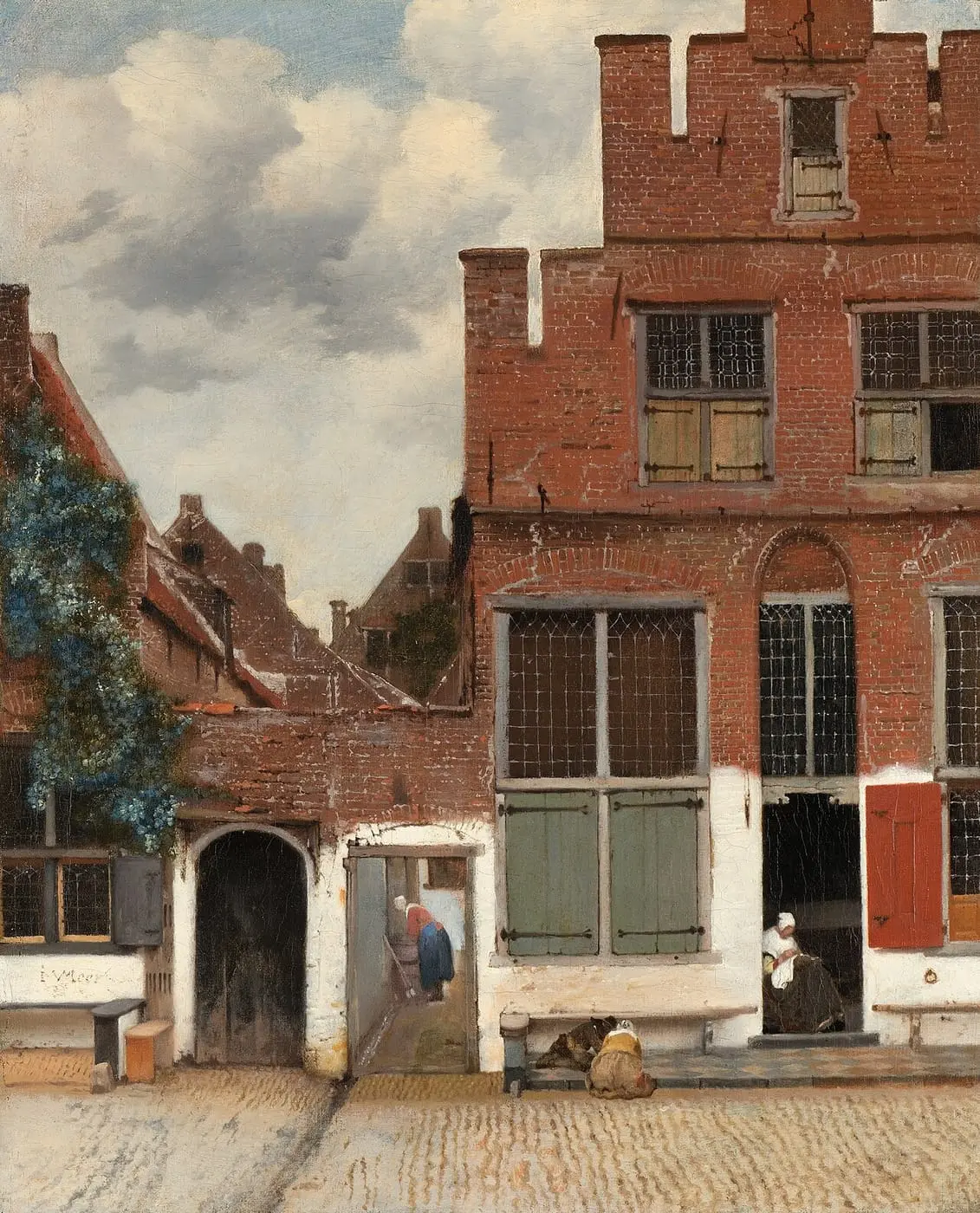
Own a hand-painted copy
The Little Street
Painted by hand in oil on canvas, any size. Free worldwide shipping.
From $299 — Make it yours.Frequently asked questions
Where is the house in The Little Street?
Research in 2015 identified the site as the Vlamingstraat in Delft, where Vermeer's aunt lived; the houses no longer exist.
When was The Little Street painted?
Vermeer painted it around 1658.
How many cityscapes did Vermeer paint?
Only two survive: The Little Street and View of Delft.
Where is The Little Street?
It is in the Rijksmuseum in Amsterdam.
Sources and further reading
- Rijksmuseum, collection notes on The Little Street and research on its location (2015)
- Frans Grijzenhout, Vermeer's Little Street: A View of the Penspoort in Delft (2015)
- Walter Liedtke, Vermeer: The Complete Paintings (2008)
