


Listen to this article
0:00 / 4:13 · Read by ArtLogia
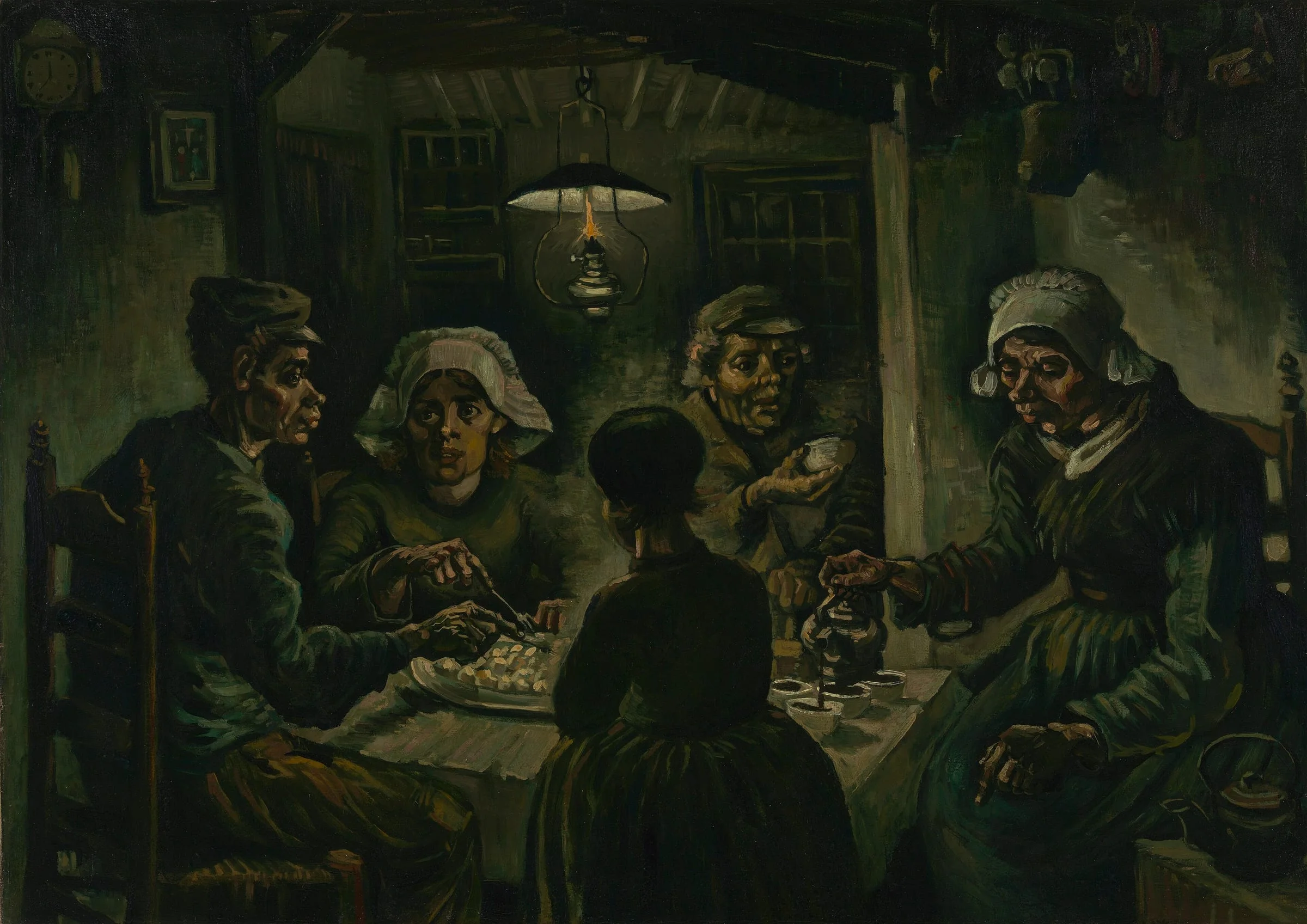
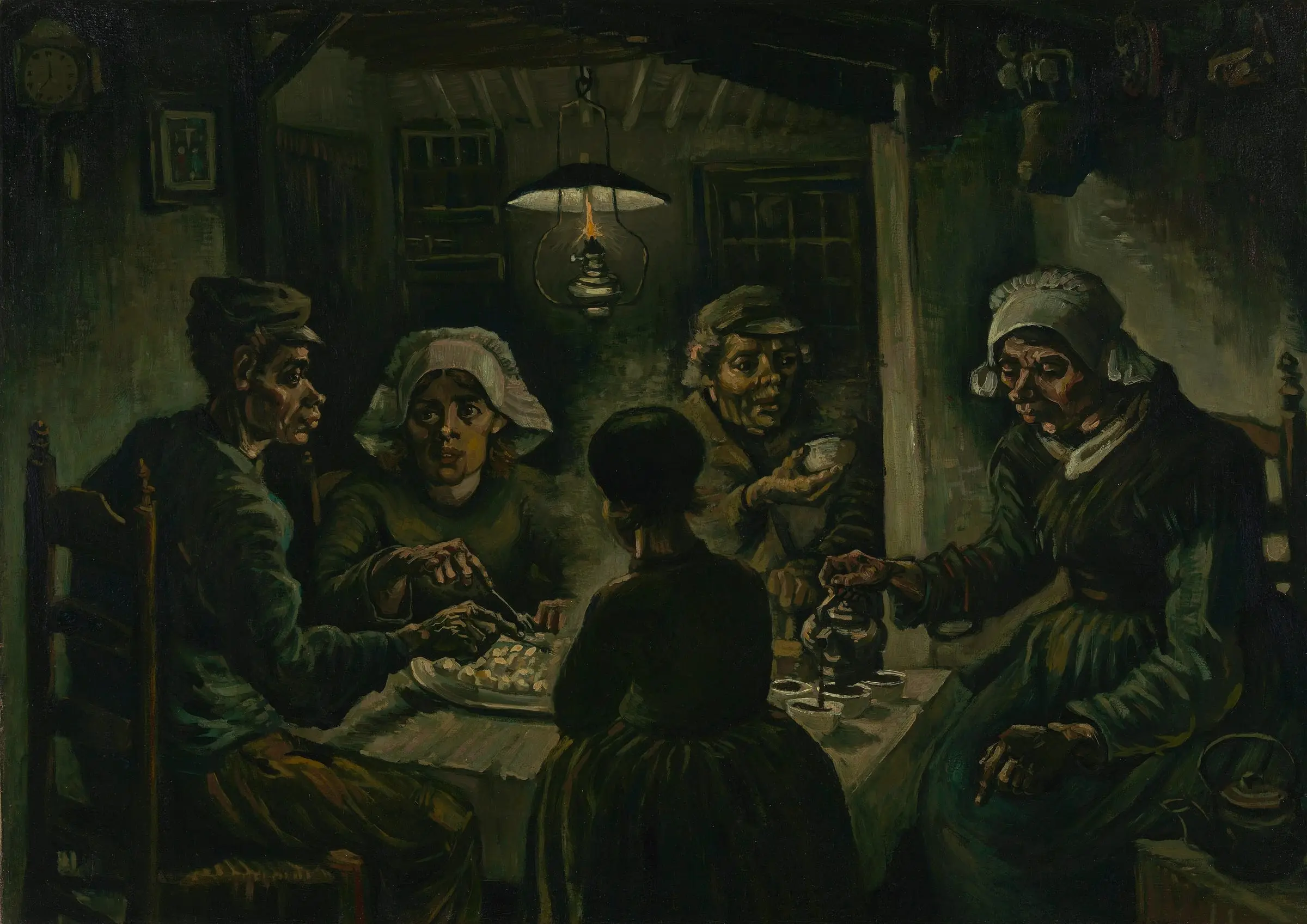
Five peasants share a meal of potatoes by the light of a single lamp. Van Gogh painted The Potato Eaters in 1885 in Nuenen, and he wanted it to smell of bacon, smoke and potato steam. It is dark, rough and deeply tender.
In this article
A painting of peasant life
In the spring of 1885 Vincent van Gogh was living in Nuenen, a village in the Dutch province of North Brabant, where his father was the pastor. He had been painting the local weavers and farm workers for months, making dozens of studies of heads and hands. The Potato Eaters was meant to be his first great figure painting, the proof that he was a true painter of peasant life like Jean-François Millet, whom he admired deeply.
The family he painted was the De Groot family, who lived in a small cottage nearby. Van Gogh wrote to his brother Theo that he wanted to show that these people, eating their potatoes under the lamp, had dug the earth with the very hands they were putting in the dish, and so had honestly earned their food.
The colour of the earth
The painting is famously dark. Van Gogh used heavy browns, greens and greys, and wrote that the faces were painted in "the colour of a very dusty potato, unpeeled of course". He was influenced by the Hague School and by the old Dutch masters, especially Frans Hals and Rembrandt, who worked in deep tones. The paint has also darkened with time, and parts that once looked greener or bluer now look almost black.
The lamp
All the light comes from one small oil lamp hanging above the table. It touches the faces, the steam rising from the potatoes and the coffee being poured, leaving the corners of the room in darkness. The lamp creates an intimate circle around the meal, almost like a sacred scene.
 Detail 1
The oil lamp
The single lamp lights the table and the faces from above. Van Gogh painted its glow with thick, warm yellows that stand out against the dark beams of the ceiling.
The hands
Van Gogh deliberately made the hands large and bony, the hands of people who work the land. They reach for the potatoes, hold the forks and lift the cups. He wanted them to look rough, and he insisted that a peasant painting should not be polished or pretty.
Detail 2Hands that dug the earth
The hands are knotted and coarse, painted with heavy strokes. Van Gogh said they were the hands that had dug the very potatoes on the table.
The faces
Each face is turned in a different direction, lit from a different angle by the lamp. The man on the left looks at the young woman beside him; the old woman on the right pours coffee with total concentration. Their features are exaggerated, almost caricatures, which shocked some of Van Gogh's friends. He replied that he wanted to paint peasants as they were, not as city people imagined them.
Detail 3Pouring the coffee
The woman on the right pours coffee into the cups, her face lit in profile. Coffee and potatoes were the staple food of poor families in Brabant.
The girl with her back to us
In the centre, a girl sits with her back to the viewer, a dark silhouette against the light. She is the link between us and the family, as if we too were sitting at the table. The steam rising from the potatoes curls just above her head.
Detail 4The girl in silhouette
Seen from behind, the girl draws us into the circle of the meal. Her figure is outlined by the light of the lamp.
A painting that divided opinion
When Van Gogh sent a lithograph of the composition to his friend Anthon van Rappard, Van Rappard criticised it harshly, which ended their friendship. Van Gogh himself never doubted it. Years later, in the south of France, he still considered The Potato Eaters one of his best works. A year after painting it he moved to Paris, where he discovered the bright colours of Impressionism, but he never lost his commitment to ordinary people.
Seeing The Potato Eaters
The painting measures about 82 by 114 centimetres and is in the Van Gogh Museum in Amsterdam, where an earlier sketch and a lithograph of the same scene are also kept.
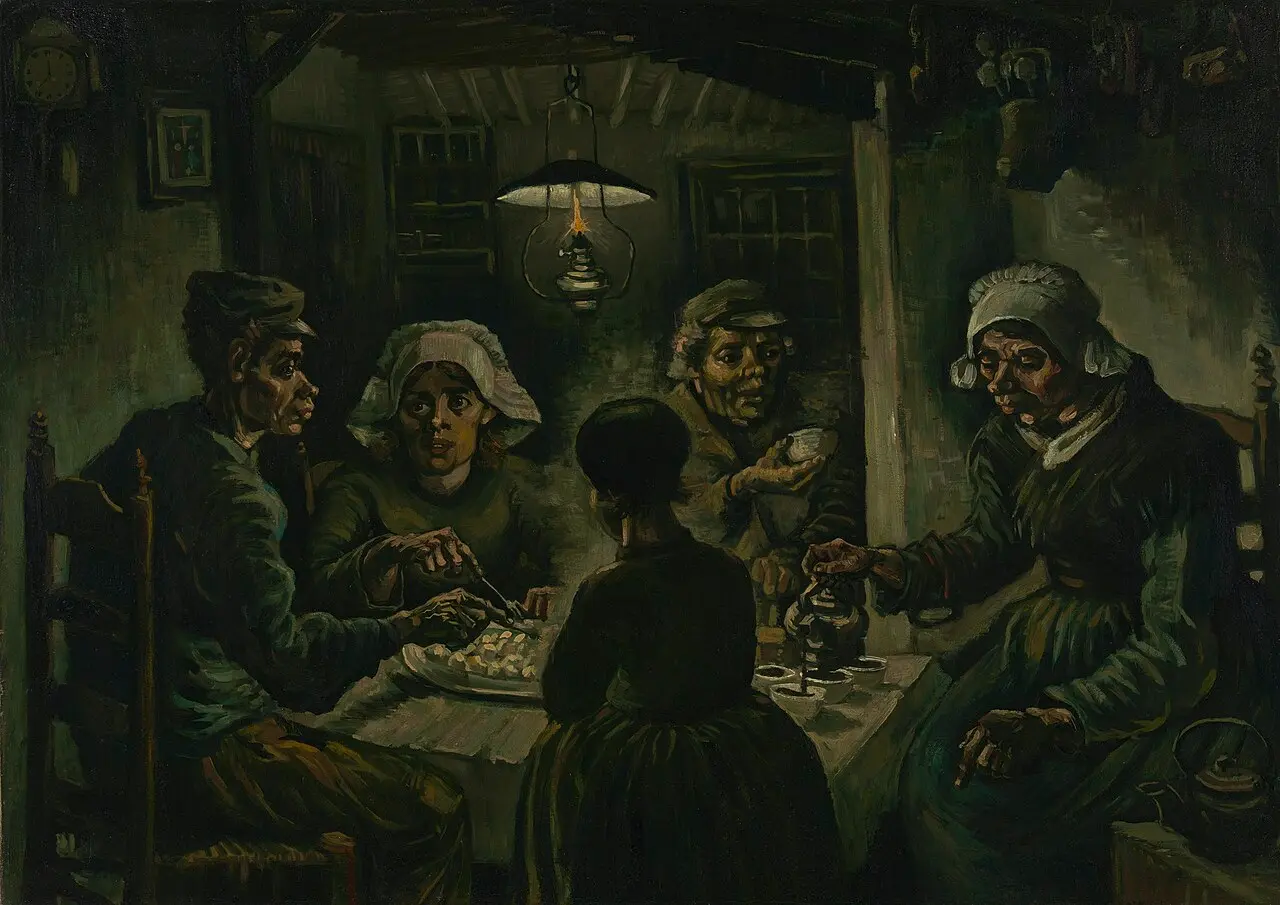
Own a hand-painted copy
The Potato Eaters
Painted by hand in oil on canvas, any size. Free worldwide shipping.
From $299 — Make it yours.Frequently asked questions
When did Van Gogh paint The Potato Eaters?
He painted it in April 1885 in Nuenen, in the Netherlands.
Why is The Potato Eaters so dark?
Van Gogh chose earthy browns and greens to show the hard life of peasants; the paint has also darkened over time.
Who are the people in The Potato Eaters?
They are members of the De Groot family, peasants from Nuenen whom Van Gogh painted many times.
Where is The Potato Eaters?
It is in the Van Gogh Museum in Amsterdam.
Sources and further reading
- Van Gogh Museum, collection notes on The Potato Eaters
- Vincent van Gogh, letters to Theo van Gogh, April–May 1885
- Van Gogh Museum, The Potato Eaters: Mistake or Masterpiece? (2021)
