


Listen to this article
0:00 / 3:01 · Read by ArtLogia
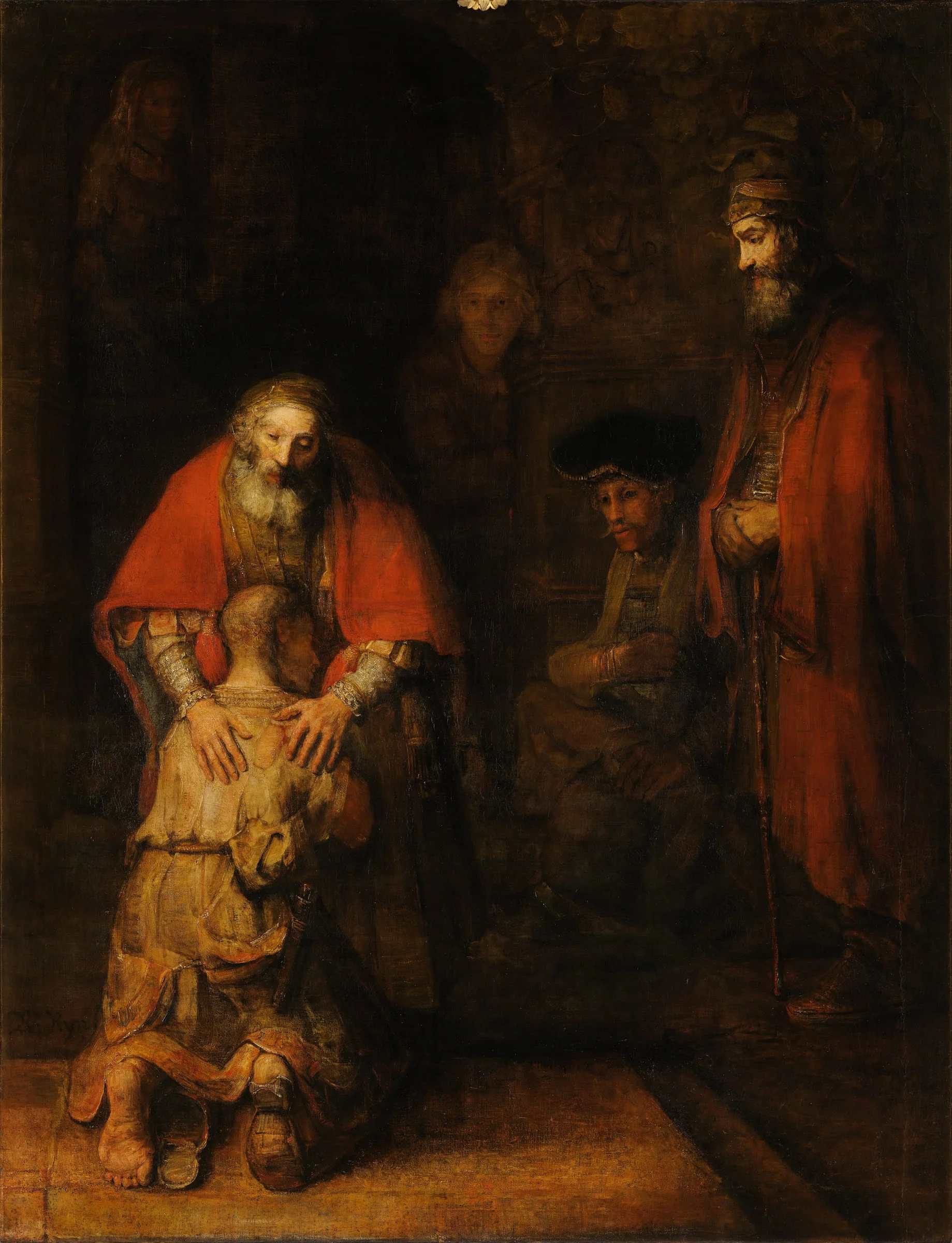
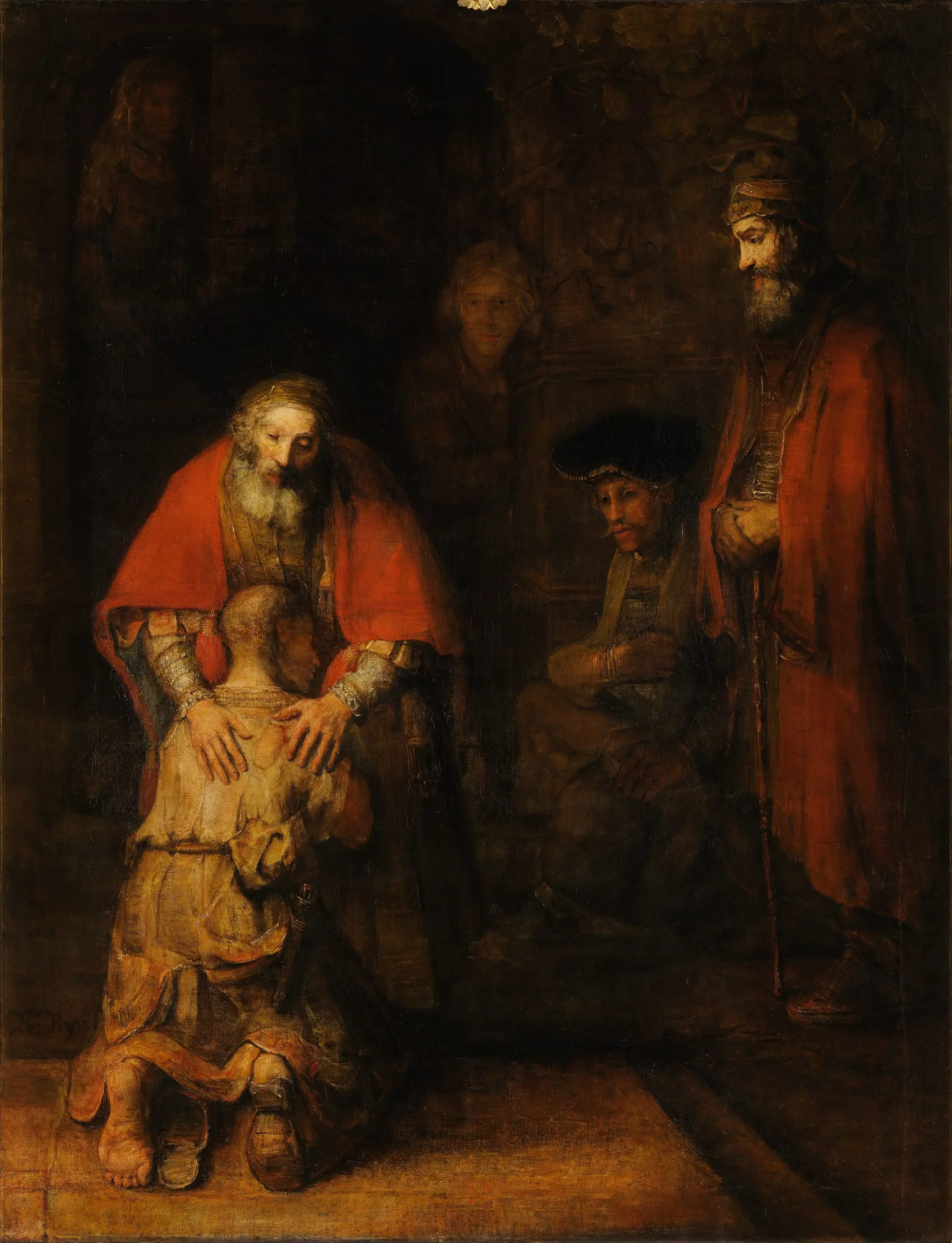
A ragged young man kneels before his old father, who embraces him with both hands, while the elder brother watches coldly from the side. Painted around 1668, near the end of his life, Rembrandt's The Return of the Prodigal Son is one of the most moving images of forgiveness ever made.
In this article
The parable
In the Gospel of Luke, Jesus tells the parable of a man with two sons. The younger son asks for his inheritance, leaves home and wastes it all in reckless living. Reduced to poverty, working as a swineherd, he decides to return home and beg his father to take him back as a servant. But his father sees him from far off, runs to him, embraces him and celebrates his return. The elder son, who had always stayed and obeyed, is angry at this welcome.
Rembrandt painted the moment of reconciliation around 1668, at the end of a life marked by bankruptcy and the deaths of his wife, his companion and his son Titus. It is one of his last great works.
The father's hands
The old father, nearly blind, bends over his son and rests both hands on his back. Look closely and the two hands are different: the left hand is broad and strong, a man's hand; the right hand is slender and gentle, almost a woman's. Many have seen in them the fatherly and motherly love of God.
 Detail 1
The father's two hands
The father places both hands on his son's back. One is strong and broad, the other slender and tender.
The father's face
The father's face is calm, his eyes almost closed, his expression one of deep tenderness and sorrow. He is dressed in a rich red cloak, and his whole body forms a shelter around the kneeling son.
Detail 2The father's face
The old father's face, with half-closed eyes, expresses forgiveness and grief beyond words.
The son
The son kneels with his head pressed against his father's chest. His head is shaved, like that of a prisoner or a beggar, and his clothes are torn. One of his feet has lost its sandal, and the other sandal is worn through, a sign of his long and painful journey home.
Detail 3Worn sandals
The son's bare, dusty foot and broken sandal tell the story of his long journey and his poverty.
The elder brother
On the right stands a tall man in a red cloak, holding a staff, looking down at the scene without joy. He is usually identified as the elder brother, who resents the welcome given to the prodigal. Other figures watch from the shadows.
Detail 4The elder brother
The tall figure on the right watches the reunion with a cold, unmoving expression, embodying resentment.
A painting that moved a priest
The Dutch priest and writer Henri Nouwen saw the painting in Saint Petersburg in 1986 and spent hours in front of it. His book The Return of the Prodigal Son, a meditation on the painting, has been read by millions and made the work famous far beyond the art world.
Seeing the painting
The painting is large, about 2.6 by 2 metres. It was bought by Catherine the Great in 1766 and hangs in the State Hermitage Museum in Saint Petersburg.
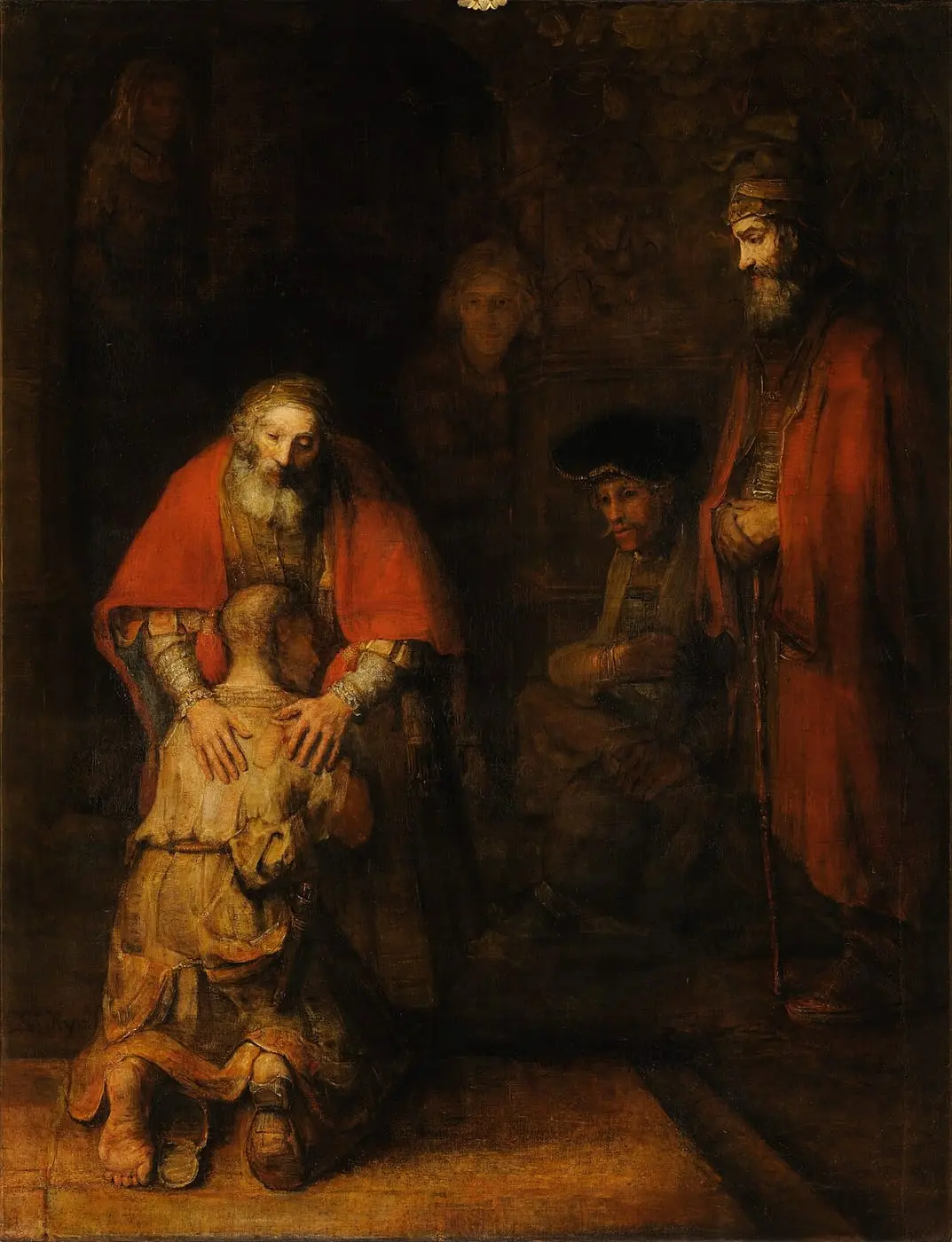
Own a hand-painted copy
The Return of the Prodigal Son
Painted by hand in oil on canvas, any size. Free worldwide shipping.
From $299 — Make it yours.Frequently asked questions
What is the story of the prodigal son?
In a parable told by Jesus in the Gospel of Luke, a son who wasted his inheritance returns home and is forgiven and welcomed by his father.
Why are the father's hands different?
One hand is strong and masculine, the other slender and gentle, often interpreted as the fatherly and motherly love of God.
When did Rembrandt paint The Return of the Prodigal Son?
He painted it around 1668, near the end of his life.
Where is The Return of the Prodigal Son?
It is in the State Hermitage Museum in Saint Petersburg.
Sources and further reading
- State Hermitage Museum, collection notes on The Return of the Prodigal Son
- Gospel of Luke 15:11–32
- Henri Nouwen, The Return of the Prodigal Son: A Story of Homecoming (1992)
