About the museum
The story of the Palace of Versailles
The Palace of Versailles grew from a royal hunting lodge into the seat of the French court under Louis XIV from 1682. In 1837 King Louis-Philippe turned it into a museum of the History of France.
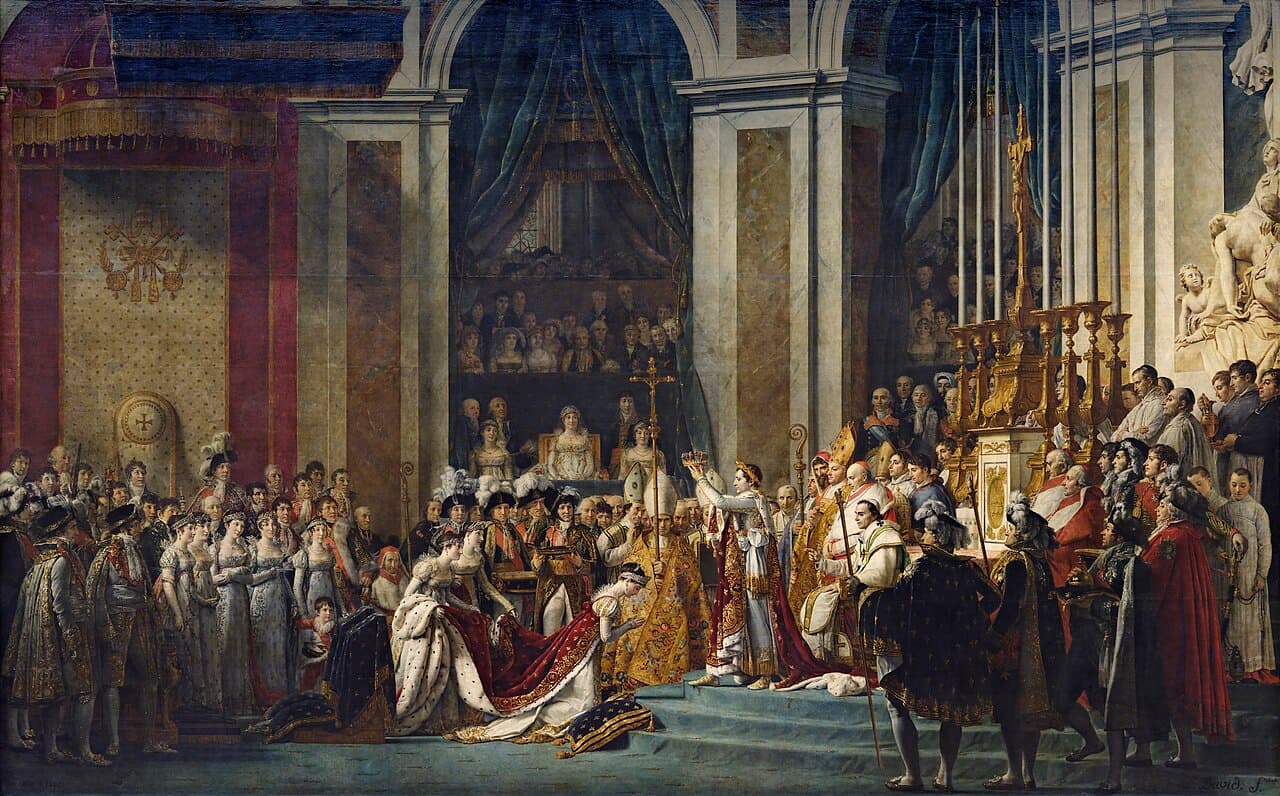
Beyond the Hall of Mirrors and the royal apartments, it holds vast history paintings and portraits of the French court, including David's Coronation of Napoleon.
The collection
Louis-Philippe dedicated Versailles 'to all the glories of France' and filled it with paintings of French history, from the Battles Gallery's huge canvases to royal portraits by Rigaud, Nattier and Vigée Le Brun.
The palace's state rooms, chapel and opera also preserve ceiling paintings by Charles Le Brun, and the museum holds David's second version of The Coronation of Napoleon.
At ArtLogia you can order 165 of its paintings as hand-painted reproductions, by 97 artists led by Horace Vernet, Jean-Marc Nattier and Élisabeth Louise Vigée Le Brun.
- paintings to order
- 165
- artists
- 97
- art movements
- 8
- years covered
- 1536–1892
The building
Louis XIV transformed his father's hunting lodge from 1661 with the architect Louis Le Vau, the painter Charles Le Brun and the gardener André Le Nôtre. Jules Hardouin-Mansart's Hall of Mirrors of 1678–84 was the scene of the signing of the Treaty of Versailles in 1919.
Masterpieces to see

Planning a visit
Arrive at opening time, see the palace first, and leave the afternoon for the gardens and the Trianon.